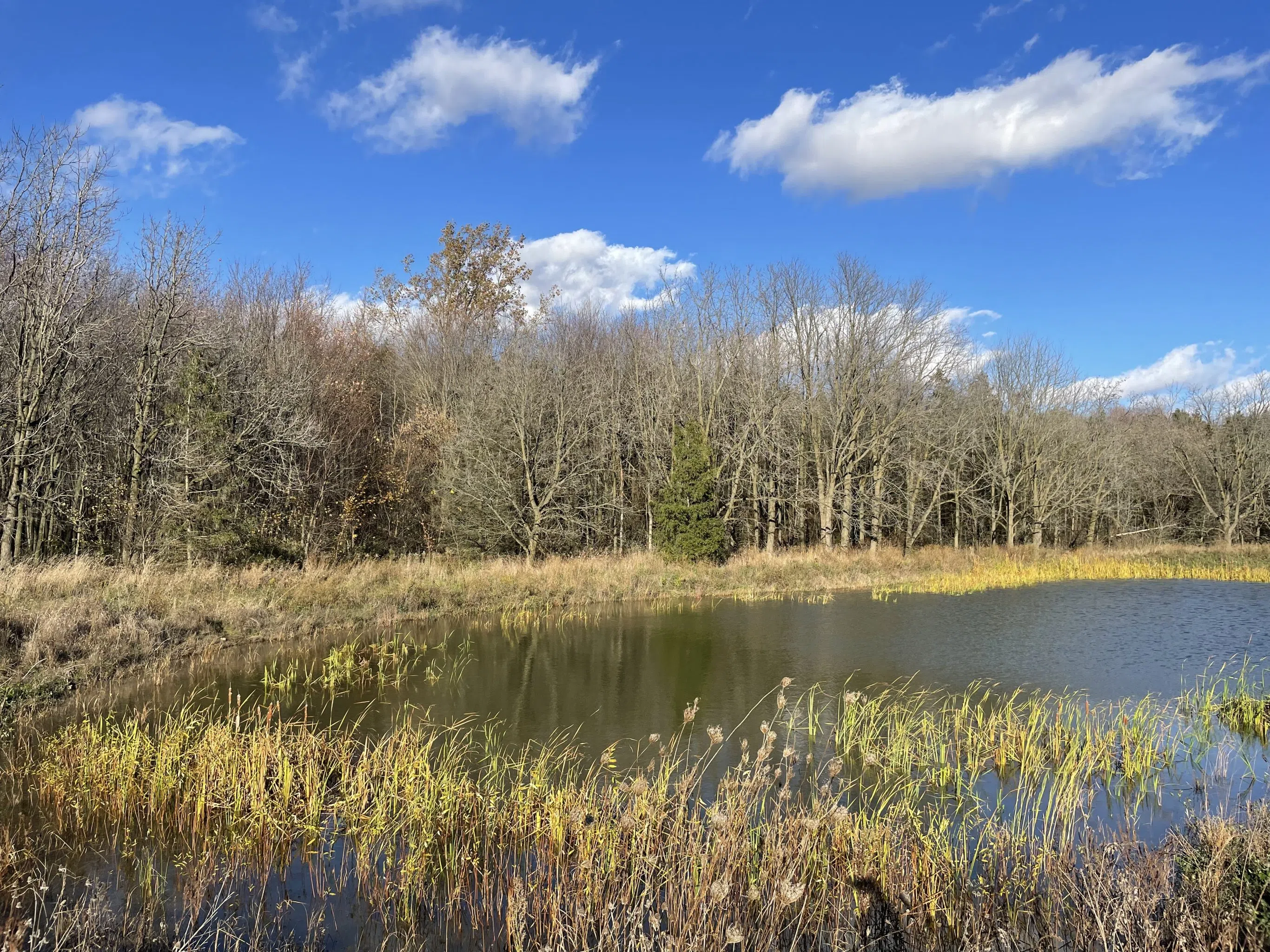
| Photo submitted
Everyone can agree that clean water is best for everyone, but what can we do on the ground to protect our most valuable natural resource? The question requires a step back, and a broader perspective.
Mari Veliz, a Healthy Watersheds Technician with the Ausable Bayfield Conservation Authority, says that while watersheds may not be something we think about often, they come to life during rain events.
They’re defined by higher land areas, where water flows downhill and accumulates into rivulets, streams, and eventually into rivers like the Bayfield, Thames or Ausable.
To hear more about watershed conservation and what you can do to help, head to exetertoday.ca
To ensure a healthy watershed, we need to consider the perspectives of all living beings within it.
Healthy watersheds are marked by clean water, prosperous communities, and abundant wildlife. Key factors impacting watershed health include water quality indicators, species diversity, forest cover, wetlands, and groundwater levels.
Successful watershed management strategies in our region would benefit everyone that lives on the landscape in many ways.
Landowners can look to increase tree coverage or usage of cover crops, and small changes like switching from impermeable surfaces like concrete to permeable surfaces like gravel when feasible help hold water on the land. This ensures that it doesn’t all run off at the same time during rain events, and overwhelm the river’s ability to move it from place to place.
Improving watersheds leads to better downstream outcomes, including enhanced water quality, reduced flooding, improved biodiversity, and climate change mitigation.
Written by: B. Shakyaver
