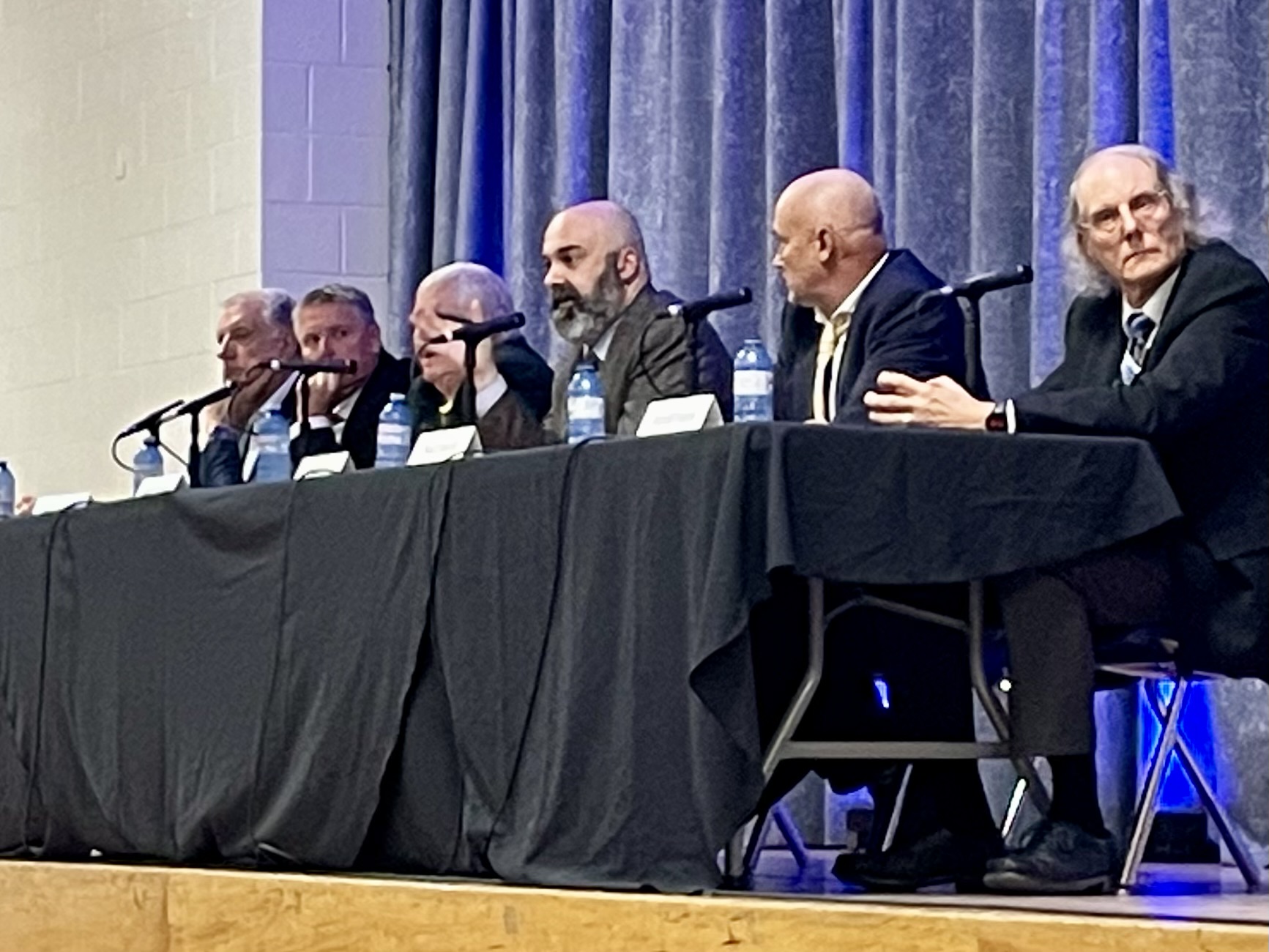
Norfolk County’s six mayoral candidates offered different approaches to taxes, housing, municipal spending and economic growth during a well-attended debate in Port Dover.
Noel Haydt, Adam Veri, David Finch, Doug Brunton, Ken Hewitt and Keith Milner took part in the October 13 debate at the Port Dover Community Centre.
Candidates were asked how they would turn campaign promises into action, control future tax increases and address affordable housing.
Their answers showed some common ground, particularly around finding efficiencies and encouraging economic growth, but also highlighted clear differences in how they believe Norfolk should get there.
Turning campaign promises into action
Candidates were first asked to choose one major campaign promise and explain how they would realistically achieve it while recognizing that the mayor has only one vote on council.
Veri focused on his proposed municipal services review, which would examine one County division each year and look at the services it provides, potential efficiencies and possible cost savings.
Brunton pointed to infrastructure spending, saying he wants a closer accounting of major projects that have gone over budget.
Milner also called for spending changes, with a particular focus on reducing the County’s reliance on outside consultants.
Hewitt said one of his major promises is bringing annual tax increases closer to the rate of inflation. He argued tighter operating budgets could help make that happen without draining reserves.
Finch said his priority is making County government more open and accountable, including reviewing management and determining how many employees report to each supervisor.
Haydt focused on revitalizing Norfolk’s downtowns by working with property owners, BIAs and local businesses while reducing red tape and making redevelopment easier.
How should Norfolk control future tax increases?
Property taxes brought some of the sharpest differences of the night.
Candidates were asked how Norfolk could manage future tax increases while maintaining essential services and investing in infrastructure.
Brunton said the County needs to take another look at planned infrastructure work before setting the 2027 budget, particularly with outside economic pressures adding to costs.
Hewitt argued Norfolk needs to attract more commercial and industrial development, saying rising taxes, water rates and development charges can make the community less competitive.
Milner also put growth at the centre of his answer, arguing delays in building permits are driving potential investment elsewhere.
Finch said he wants a clearer picture of County finances, including reserves, while also pushing harder to bring industrial investment to Norfolk.
Haydt pointed to the cumulative increases residents have already faced and said Norfolk needs to control operating costs, set more realistic capital budgets and grow its commercial and industrial tax base.
Veri pushed back on suggestions that Norfolk’s financial information is unavailable and defended development charges as a way to make sure growth-related infrastructure is not entirely paid for by existing taxpayers.
Candidates offer different approaches to affordable housing
Housing also exposed a philosophical difference between candidates, particularly over how much responsibility should fall on the municipal taxpayer.
Haydt said Norfolk needs to support affordable and transitional housing while working with developers on denser housing, smaller units and options such as secondary suites.
Veri pointed to the Haldimand-Norfolk Housing Corporation and a model that combines government funding with mixed-income developments.
Brunton said private developers alone cannot create deeply affordable housing when construction and financing costs remain high.
Hewitt said the County should work with the housing corporation, organizations such as Indwell and developers while seeking additional provincial and federal funding.
Milner argued temporary shelter programs are not enough and said Norfolk needs a permanent facility with support from the province.
Finch took a different approach, arguing affordable and assisted housing are provincial responsibilities and questioning the use of local property tax dollars to support provincially mandated programs.
These questions gave voters a closer look at how the candidates would approach some of the biggest financial and social challenges facing Norfolk County.
All six talked about the need for change, but differed on where savings should come from, how Norfolk should encourage growth and how large a role the County should play in addressing affordable housing.
Norfolk County voters will make their choice on October 26.
Written by Jeremy Hall
