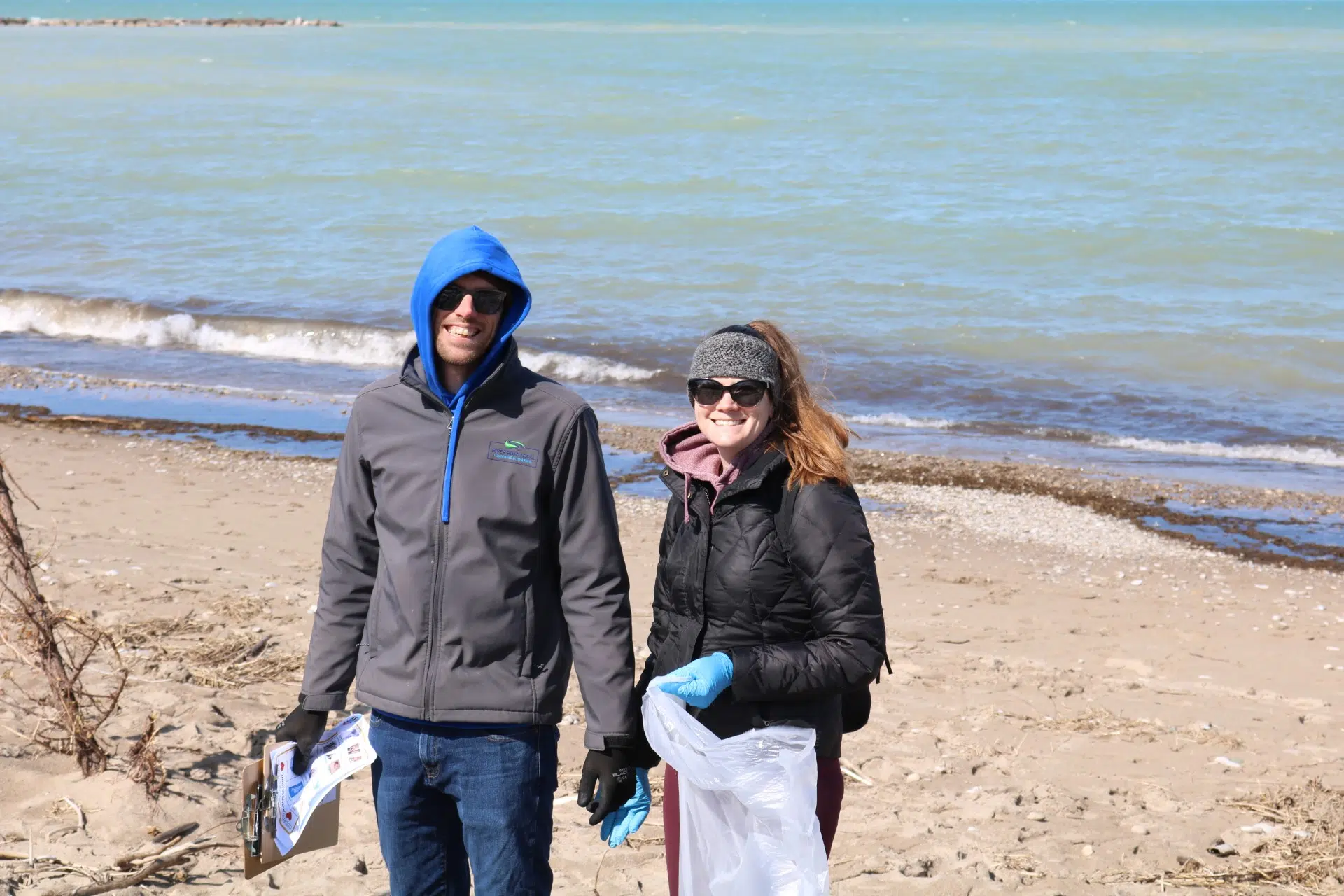
Participants at a cleanup event in Goderich last Spring | Photo provided
In an effort to protect the beauty of Lake Huron’s coastline and combat the escalating issue of plastic pollution, the Lake Huron Coastal Centre, is spearheading a series of ambitious cleanup events throughout the summer.
These events, powered by the collective effort of volunteers, aim to remove a staggering 1,000 pounds of litter from the shoreline, leaving a positive impact on the environment and local communities.
Coastal Stewardship Technician Alyssa Bourassa says that the amount of trash that makes it’s way into the Great Lakes is staggering,
This poses a severe threat to wildlife through entanglement and ingestion. Additionally, the quality of water and soil in the area is compromised, impacting ecosystems and local communities. Alongside eliminating the ecological threat that trash presents, Bourassa says that there is another benefit,
During their cleanup efforts, volunteers have encountered several surprising items that have been irresponsibly discarded along the shoreline. Abandoned tires have been a common find, and their slow breakdown process leads to the release of microplastics, contributing further to environmental degradation. However, one surprising item have emerged as a prevalent item recovered during shoreline cleanups across Canada.
To raise awareness and encourage community participation, the Lake Huron Coastal Centre invites concerned individuals to RSVP for the Grand Bend Cleanup event on July 29th. Detailed information about dates, times, and locations for all cleanup events can be found on their website at lakehuron.ca/cleanupthecoast.
These cleanup initiatives, organized by the Lake Huron Coastal Centre, would not be possible without the support and funding provided by the Great Lakes Local Action Fund, the Sunset Community Foundation, and local business sponsorships. Additionally, local municipalities play a crucial role in partnering with the Coastal Centre to ensure the success of these vital environmental initiatives.
Written by: B. Shakyaver
